Thermal stress analysis with COMSOL Multiphysics.

Dynamic thermal stress analysis predicts stresses and deformations caused by temperature changes. At Physixfactor, we use COMSOL Multiphysics to combine heat transfer and structural mechanics, enabling accurate thermomechanical simulations for industrial products, electronic devices, heat exchangers, and mechanical components. For Exxon Mobile in Antwerp work has been done to investigate the stress development of a heat exchanger. During a cleaning cycle temperature fluctations can become severe, inducing high stresses in the system because of the thermal expansion. Physixfactor investigated the stress developement during time and proposed a more evenly spread stress development to prevent excessive stress peaks during the cycle.


Thermal stress simulations in a heat exchanger.
Thermal stress in a heat exchanger petrochemical industry
Thermal stress sim,ulatiion with COMSOL multiphysics
Bottom heat exchanger

Thermal Stress Calculation

During a cleaning cycle in the petrochemical industry the heat exchangers might suffer from extreme stress calculations due to the high thermal gradients. Finite Element Method (FEM) software can reveal the time dependent stress cycle in this system. This example is about a thermal stress calculation in Exxon Mobile pipes. During the production of polymers, raw materials from petroleum are processed at high, constant temperatures. A heat exchanger provides cooling during the production of a polymer. The heat exchanger is flushed with a cleaning fluid approximately once or twice a week to keep it functioning optimally. During flushing, high stresses occur in the complex geometric structure in a short time due to the large temperature fluctuations. A thermal stress calculation was deemed necessary by Exxon Mobile. In the case the critical spot for excessive stress and wear could be indentified.
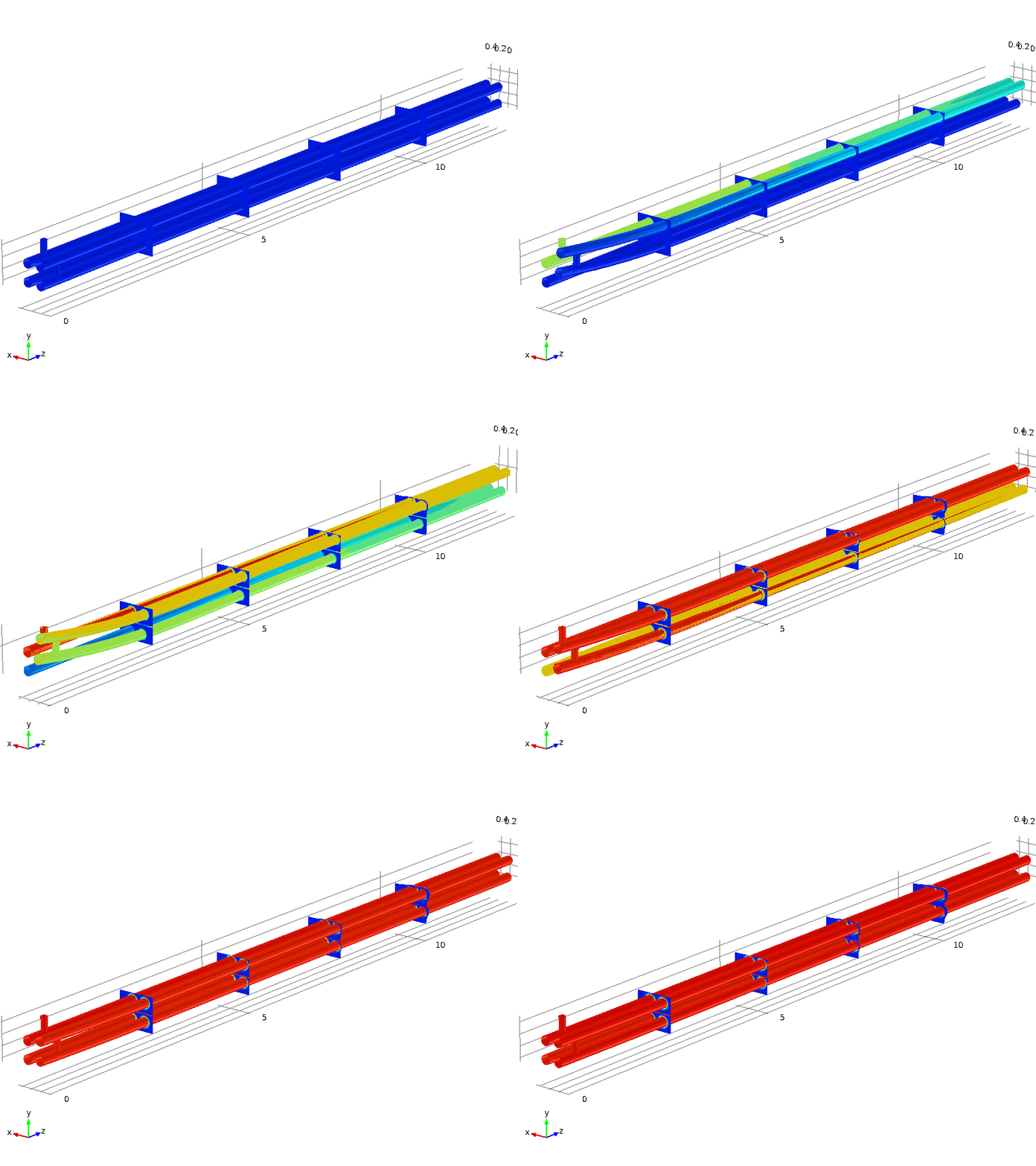
Thermal expansion, time dependent stress

The situation was recorded at the location of the petrochemical plant and the complex fluid flow was mapped using working drawings. Due to the complex geometric structure of the heat exchanger, the structure in the FEM model had to remain simple. Essential points and boundary conditions that cause the tensions were implemented into the model. With this approach the variable temperature profile of a hot flushing fluid and the voltage calculation could be set up. The video to right shows the mechanical effect of the temperature pulse in the system. Due to the asymmetric thermal  load during the flushing cycle the tubing systems suffers from bending stress. 

Picture of heat exchanger
Top part heat exchanger
Simulation of thermal stresses in a heat exchanger.
Side view heat exchanger

Localising stress spots in heat exchanger

Locate the places of highest stress in a heat exchanger with a stress calculation with FEM. These tensions occur several times a week. are caused by significant temperature fluctuations during rinsing or flushing. The FEM simulation resulted in an 80% reduction of the peak load in the material, which greatly improved its service life. The thermal cycle was simulated over time, and in this way insight was gained where the design could be further improved.

  • Stress reduction during the flush cycle is 80%.
  • Heat exchanger efficiency increased by 30%.
  • Stress corrosion is now avoided.