Structural Mechanics Simulation in COMSOL
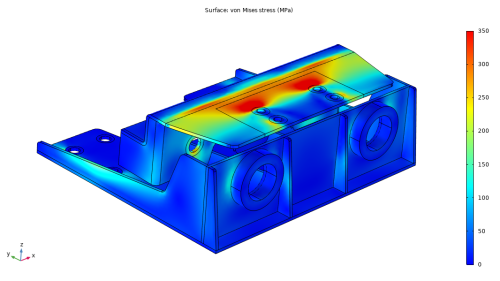
Physixfactor provides advanced structural mechanics simulation services using COMSOL Multiphysics for industrial applications. The focus is on accurate prediction of stress, deformation, vibration and stability in complex engineering systems.
Applications include mechanical components, offshore structures, energy systems and high-performance industrial equipment where reliability and physical accuracy are critical.
Engineering Structural Mechanics Expertise
Structural mechanics simulations are essential for understanding how materials and structures respond to loads, constraints, temperature changes and dynamic effects.
Physixfactor specializes in robust, physics-based modeling of structural systems where multiple physical effects interact, including mechanical, thermal and sometimes electromagnetic coupling.
The goal is not only to compute stresses and displacements, but to ensure that the simulation reflects real engineering behaviour through proper modelling choices and validation.
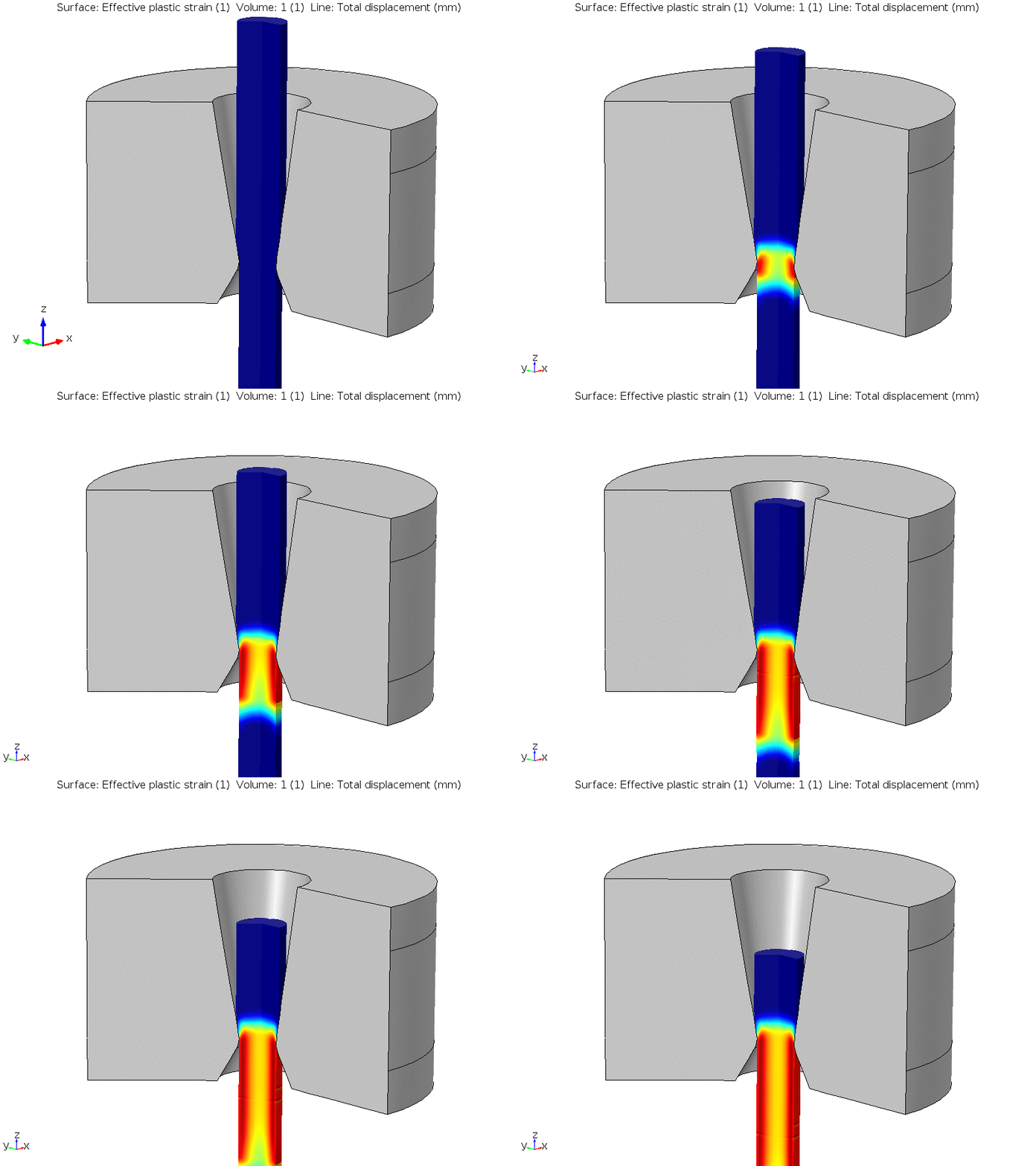
Nonlinear Structural Analysis
Nonlinear behaviour is common in real engineering systems where assumptions of small deformation and linear material response are no longer valid.
This includes:
- Large deformation effects
- Nonlinear material models (plasticity, hyperelasticity)
- Geometric nonlinearity
- Load-dependent stiffness changes
Physixfactor develops nonlinear simulation models that remain numerically stable and physically consistent, even under complex loading conditions.
👉 Typical applications include mechanical assemblies, deformable structures and high-load industrial components.
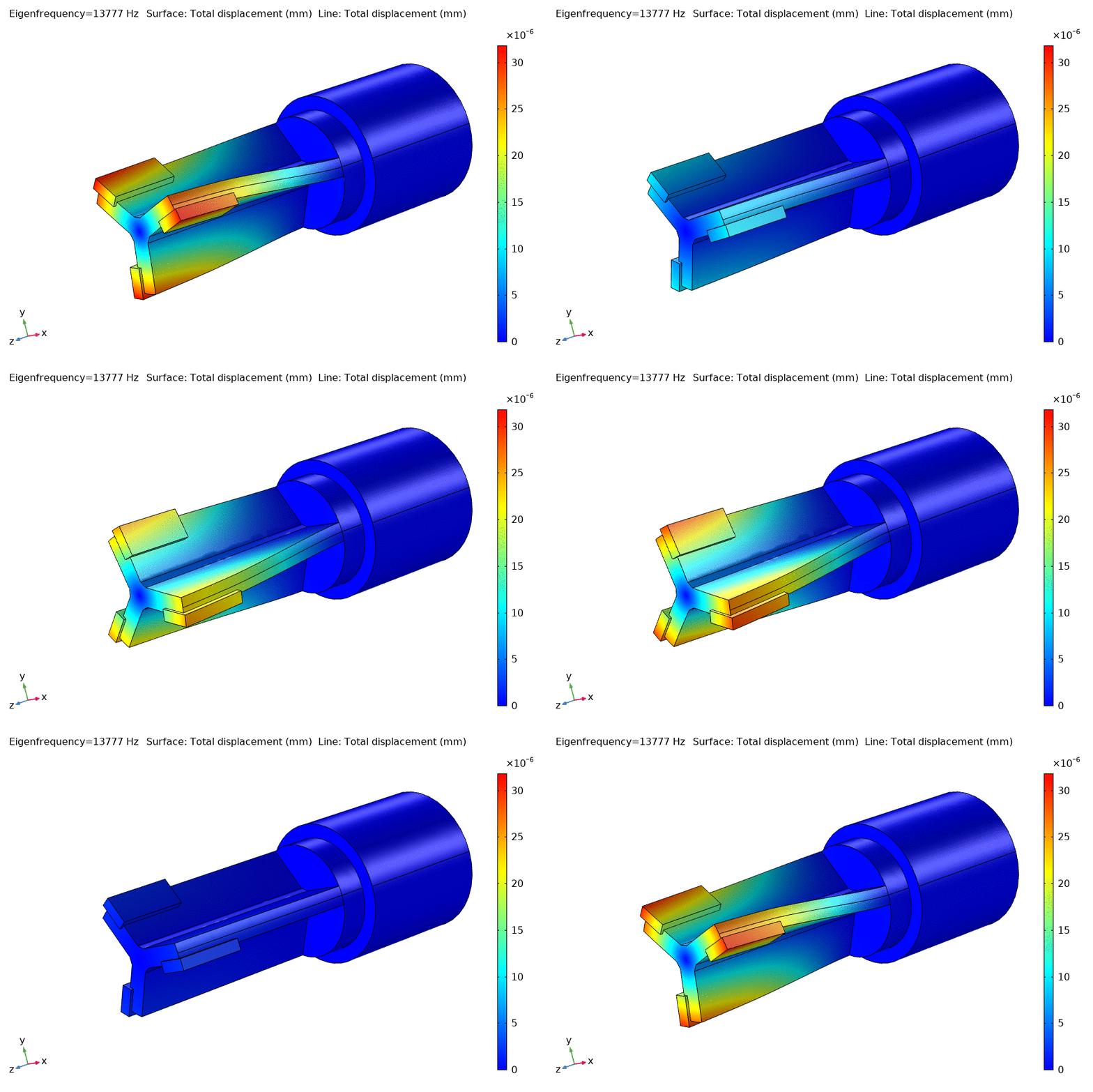
Modal Analysis and Vibration Behaviour
Understanding dynamic behaviour is critical for preventing resonance and structural failure.
Modal analysis is used to determine:
- Natural frequencies
- Mode shapes
- Dynamic response characteristics
- Resonance risk in operational conditions
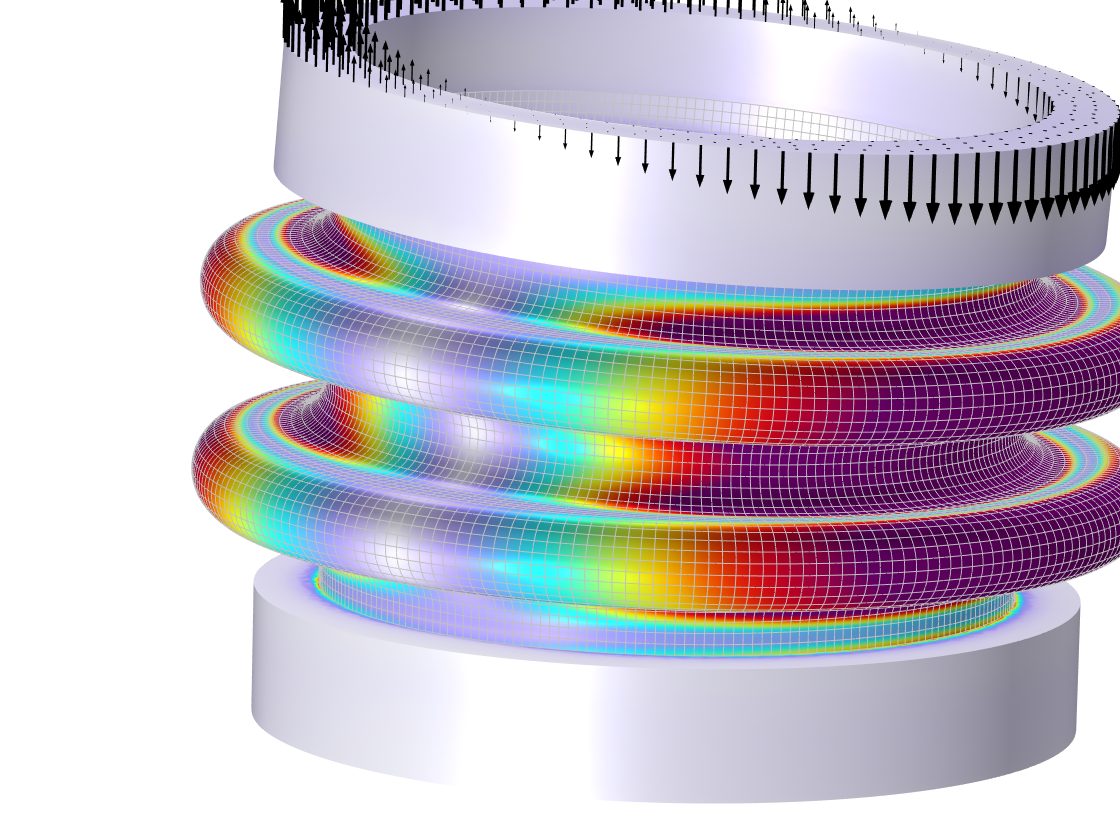
Physixfactor applies modal and eigenfrequency analysis to mechanical systems such as machinery, support structures, piping systems and offshore components.
This enables engineers to design systems that remain stable under dynamic loading conditions.
Design Heavy Duty Axis.
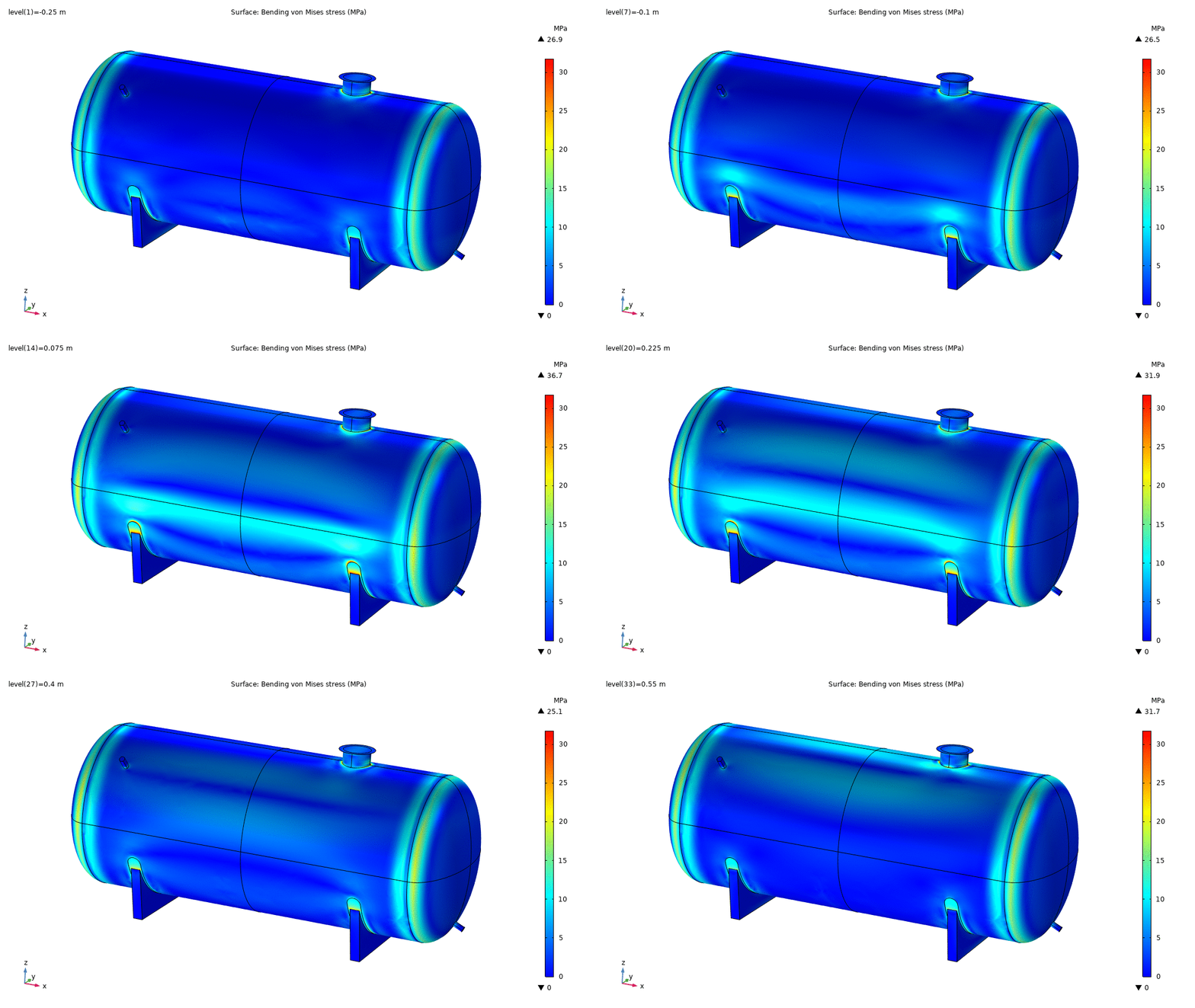
Large engineering systems often contain localized regions where stresses and gradients are significantly higher than in the global structure.
Submodeling is used to efficiently capture these effects by combining:
- Global structural models
- Local high-resolution models
- Mesh refinement in critical regions
This approach is commonly applied to:
- Welded joints
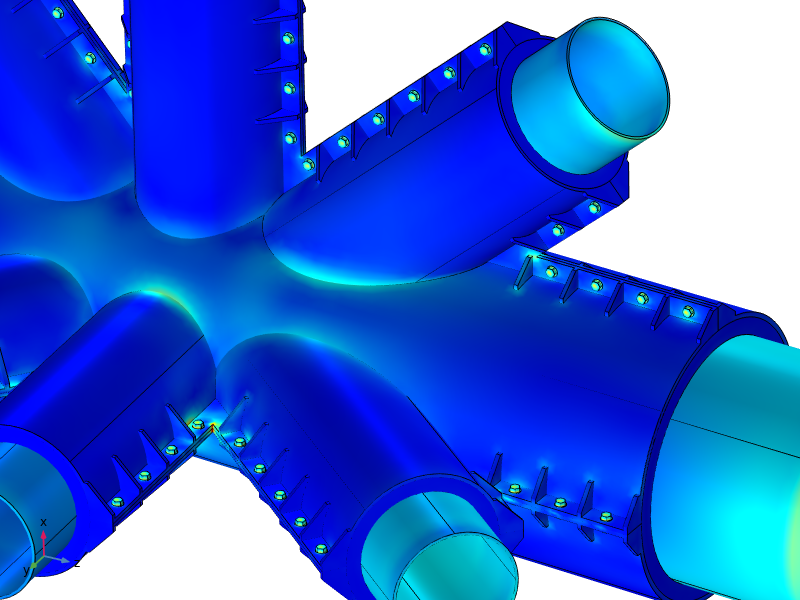
- Bolted connections
- Stress concentration zones
- Offshore structural details
- Contact interfaces
Submodeling ensures accuracy without excessive computational cost.
Many mechanical systems consist of assemblies with interacting parts.
Contact mechanics simulations are used to model:
- Nonlinear contact behaviour
- Frictional interfaces
- Bolt preload and clamping effects
- Assembly deformation
These effects are highly nonlinear and require careful numerical treatment to ensure convergence and accuracy.
Physixfactor applies robust modelling strategies to ensure stable and physically meaningful contact simulations.
Thermo-Mechanical Coupling
Thermal effects often have a strong influence on structural behaviour.
Temperature changes lead to:
- Thermal expansion
- Thermal stresses
- Deformation gradients
- Material property changes
Coupled thermo-mechanical simulations are essential for systems exposed to heat transfer, such as:
- Industrial machinery
- Energy systems
- Offshore equipment
- High-temperature components
Physixfactor ensures consistent coupling between heat transfer and structural response for accurate prediction of thermal stress behaviour.
Advanced Multiphysics Structural Modeling
Many real-world problems cannot be solved using structural mechanics alone.
Physixfactor develops multiphysics models where structural behaviour is coupled with:
- Heat transfer
- Fluid flow
- Electromagnetic fields
This includes:
- Fluid–structure interaction (FSI)
- Electromagnetic force coupling
- Thermally induced structural deformation
- Multi-domain engineering systems
For non-standard physics problems, equation-based modelling approaches are used to extend standard COMSOL interfaces when required.
Model Verification and Numerical Robustness
Reliable engineering conclusions require reliable simulation models.
Physixfactor applies systematic verification procedures, including:
- Mesh independence studies
- Convergence analysis
- Solver stability checks
- Boundary condition verification
- Sensitivity analysis
- Physical plausibility assessment
This ensures that results are not only numerically converged but also physically meaningful.
Structural mechanics simulations are applied across multiple industries, including:
- Offshore engineering
- Energy systems
- Industrial manufacturing
- Mechanical engineering
- High-tech equipment
- Process industry
- Research and development
Projects range from detailed component analysis to full system-level multiphysics studies.