
Wear Reduction of Wire Dies
It is important to use the data of your materials used for the wire-drawing-dies. When you use mono or polycrystalline diamond (PCD) dies it generates drawing force and the temperatures which are lower. The temperature in the die is influenced by the drawing angle and the lubricant. Also of importantcy is the casing material which which should be strong enough to prevent breaking of the die. All this is covered in the analyses of Physixfactor.

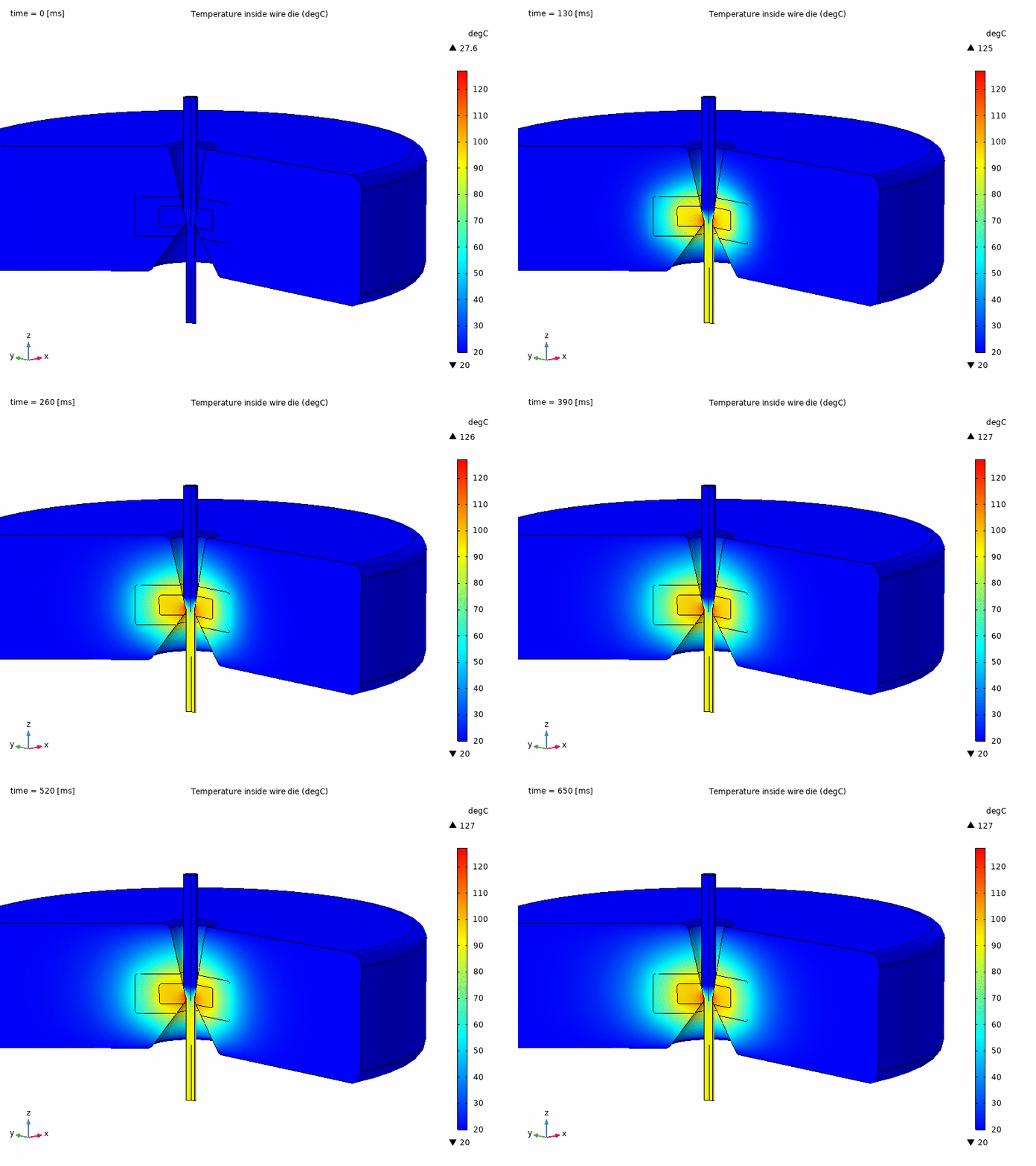
Wire Die Simulation & Increasing Lifetime
To reduce wear in the wire die, one should realise that many parameters in the die will have an effect on this. The drawing angle, the composition of the casing material (alloy), hardness of the casing around the die material. The ability to absorp the heat so that the temperatures do not have to much influence on the wear process. Based on many years of experience Physixfactor is able to advice you on the appropriate choice of alloys inside the wire die. Sintering of diamond dies in wire dies is a well known process, but the choice of the sintering material is not obvious. In order to increase the lifetime of your wire dies one should be able to choose the right hardness of the sintering material around the diamond die, and optimize for an appropriate thermal conductivity. On top of that the fixing of the diamond inside the sintering material should be strongth enough to withstand the forces experienced inside the drawing process. Thermal management of wire dies is a very important topic and Physixfactor is able to advice on this. Especially the design and size of the core (Diamond or Poly Crystaline Diamond) material, the sintering processes and strength and thermal stress in the wire dies all contribute to the performance and quality of the dies strongly. Lifetime extensions by a factor of 2(!) times or more are no exception.